
What is the EV Tax Credit in Massachusetts?
If you live in Massachusetts and are considering going electric, there’s no better state to do it in than here. In this post, we’ll take a deep dive into our state’s electric vehicle (EV) tax credit to help you save money and the planet at the same time. Topics we’ll cover include potential savings, eligibility criteria, and how to claim the credit. Best of all, anyone can benefit from this information. Whether you’re casually looking for an EV or want to take advantage of the incentives available right now, our team at Pride Chevrolet in Lynn wants to help you.
Overview of the EV Tax Credit in Massachusetts
The Massachusetts EV tax credit aims to encourage the adoption of electric vehicles by rewarding eligible purchasers with financial rebates. The state’s goal is to increase sustainable transportation and reduce greenhouse gas emissions. However, since EVs tend to have a high financial barrier to entry, the state created this incentive to help people afford the upfront costs and make EVs accessible to everyone.
As a leader in innovation and mobility solutions, the state offers a wide range of incentives to promote EV adoption, including the Massachusetts Offers Rebates for Electric Vehicles (MOR-EV) program, improved infrastructure, grants, clean energy bills, and rebates.
Eligibility Requirements
If you want to take advantage of the MOR-EV program and qualify for the EV tax credit, you should know that there are certain criteria you must meet. For starters, the eligible vehicles are battery electric vehicles and fuel cell electric vehicles. The manufacturer’s suggested retail price can’t exceed $55,000. Used EVs with a final purchase price of up to $40,000 are also eligible. You must either be a resident of Massachusetts or have a license that allows you to operate your business or nonprofit here. Active-duty military personnel stationed here with temporary addresses are also eligible.
Those who participate in an income-qualifying assistance program, such as the Supplemental Nutrition Assistance Program, can claim an additional rebate. Eligible vehicles obtained outside of Massachusetts must be registered in Massachusetts within 90 days of purchase or lease. In addition, you must own the EV for at least 36 consecutive months to maintain registration on the Massachusetts Registry of Motor Vehicles. If you lease, your lease term must also be at least 36 months.
Amount of the Tax Credit
The MOR-EV program can save you up to $3,500 on the purchase of a qualifying EV. Income-qualified residents receive an additional $1,500 rebate, meaning you could potentially save $5,000. And when you factor in the federal tax credit of up to $7,500, you could save over $10,000.
How To Claim the EV Tax Credit
There are two ways to claim the EV tax credit. One way is by applying at a participating dealership at the point of sale or lease. Just give the qualifying documents to your salesperson, and they’ll help you with the process. The other way is by applying online within 90 days after purchasing or leasing your EV. You’ll need to provide a copy of your driver’s license or other proof of residency, your vehicle registration, and your purchase or lease agreement. Keeping a binder with all your documents is the best way to ensure a hassle-free process.
Federal vs. State Tax Credits
As mentioned above, as a Massachusetts resident, you can apply for the MOR-EV program and have access to rebates of up to $3,500 for new EVs and $4,000 for used EVs. In addition, the federal EV tax credit is up to $7,500 for new eligible EVs or $4,000 for used eligible EVs. The final amount of your federal credit depends on several factors, including assembly location and battery capacity.
So, as a state resident, you can combine both state and federal incentives to save a good chunk of your purchase money. For example, let’s say you buy a new EV with both state and federal EV tax credits, and your EV qualifies for a $3,500 state rebate and a $7,500 federal rebate. You could save $11,000 on your purchase and take advantage of the government’s initiative to help the planet.
Additional EV Incentives in Massachusetts
Additional incentives include rebates for installing home charging equipment, purchasing EV chargers, and making electrical upgrades. There are also local organizations with their own rebates to help make EVs more accessible to everyone. After all, Massachusetts is the state with one of the best energy conservation programs.
Potential Changes and Future of the Tax Credit
Due to the success of the program and the state’s ongoing efforts to become more clean energy-friendly, the MOR-EV program continues to change and improve. The latest changes provide more benefits for low-income residents and also allow a wider range of EVs to qualify for the EV tax credit. For detailed and up-to-date information, visit the MOR-EV website.
If you want to keep up with the ever-expanding policies of the Massachusetts EV incentive, we recommend checking the official channels and program websites.
Get the EV of Your Dreams at Pride Chevrolet
Are you ready to save money and the planet? Come to Pride Chevrolet in Lynn and choose the EV of your dreams. We’re a participating dealer, so we can walk you through the process of applying for the rebate right here with us. Contact us now and start saving today.
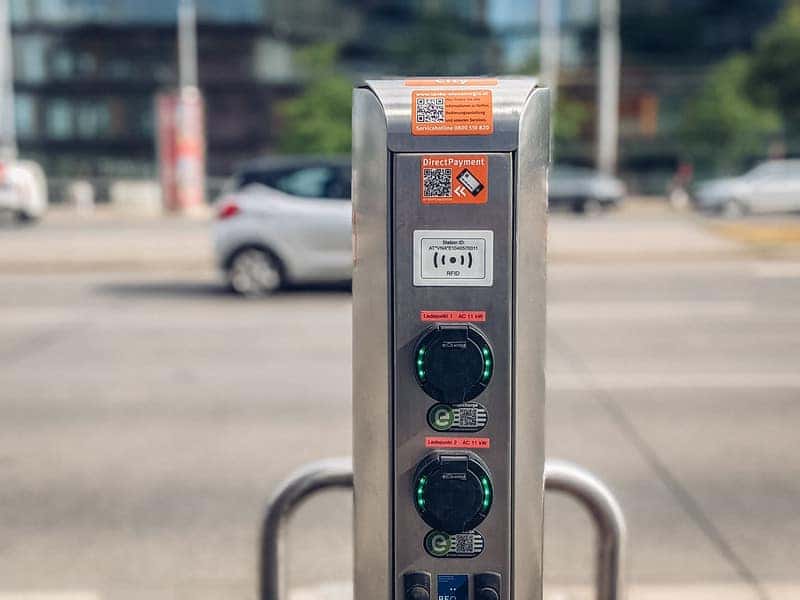
Electric vehicle charging station with blurry background by Ivan Radic is licensed with CC BY 2.0

0 comment(s) so far on What is the EV Tax Credit in Massachusetts?