
Can the 2027 Chevrolet Bolt use Tesla Superchargers around Revere, MA?
Pride Chevrolet – Can the 2027 Chevrolet Bolt use Tesla Superchargers around Revere, MA?
If you live in Revere, MA, and you are EV-curious, charging access is probably the deciding factor — especially if your daily routine runs from Broadway to Beach Street, with weekend errands up the Lynnway or quick runs to Logan. Here at Pride Chevrolet, we’ve been helping North Shore drivers evaluate the 2027 Chevrolet Bolt, and one question keeps shaping the whole conversation: can you actually plug a Bolt into the growing number of Tesla Superchargers you see around the area?
The answer and why it matters for North Shore life
Yes — the 2027 Chevrolet Bolt comes standard with a NACS charge port, which means it is compatible with most Tesla Superchargers, along with other DC fast chargers across the region. Chevrolet notes there are more than 250,000 available chargers in the U.S. and Canada, and the Bolt’s standard NACS port is designed to make public charging simple and widely accessible, including Tesla Superchargers where available. Pair that with DC Fast Charging that is more than 2.5x faster than the previous Bolt EUV and a GM-estimated 10%–80% charge in about 25 minutes, and you have a compact EV that fits daily Revere-to-Lynn commutes and longer North Shore drives with confidence.
NACS — short for North American Charging Standard — is the connector you see on Tesla stations and an increasing number of new public sites. Because the 2027 Bolt uses NACS from the factory, you do not need a separate adapter to plug into compatible NACS stations. Access and payment are managed through each charging provider’s app or on-site payment methods, and availability can vary by location, so it’s smart to check a charger’s status before you roll in from Route 1A or Squire Road.
How to plug in at a NACS Supercharger from Revere
Getting started is straightforward, and once you do it once, it becomes second nature. Here is a simple flow that fits real-world North Shore errands — say, topping up while you grab coffee along the Lynnway or between stops near Market Basket and Revere Beach.
- Use a charging locator to pick a site that shows NACS availability and open stalls.
- Arrive, park within the painted lines, and make sure the cable reaches the Bolt’s charge port.
- Wake the charger if needed, follow prompts in the network app or on-screen, and insert the connector until it clicks.
- Confirm charging has started on the charger’s screen and in your Bolt’s 11″ diagonal Driver Information Center.
- Relax — a 10%–80% session is typically around a coffee break — then stop the session in the app or on the charger, unplug, and go.
That’s the everyday reality our customers appreciate: you integrate charging into what you are already doing. No detours across town, no complicated hookups — just a quick stop along your usual Chelsea, East Boston, or Lynn loop.
What charging speed should you expect?
The 2027 Bolt supports 150 kW+ public DC Fast Charging. Under typical conditions, that translates to a GM-estimated 10%–80% in about 25 minutes at a capable station. Actual speeds vary by stall load, temperature, and your starting state of charge, but the net effect is the same — you can quickly add meaningful range during a short break.
- Arrive lower for faster rates: DC fast charging is quickest when your battery is at a lower state of charge. If you are at 65% already, a brief top-up is fine, but the highest speeds usually come between roughly 10% and 50%.
- Mind site load and time of day: Evening rush near the airport or weekend peak hours can slow shared-power stations. If your schedule is flexible, midday or early morning often means faster sessions and open stalls.
- Watch the charger’s rating: Some sites post their maximum kW on the pedestal. Pick a stall that supports higher outputs when available to take full advantage of the Bolt’s capability.
- Plan the stop to fit your errand: If you are grabbing takeout on Shirley Ave or walking the dog at Revere Beach, start charging first — by the time you are back, you are likely ready to roll.
For longer drives, the 2027 Bolt’s EPA-estimated 262 miles of electric range means many North Shore round trips are plug-and-play. When you do need public charging, the combination of NACS access and fast sessions keeps detours short.
Range confidence from Revere — common trips, simplified
From Revere to Worcester and back is roughly a 120-mile round trip. The Bolt makes that drive easy without a stop, and if your day includes detours — maybe you swing through Somerville and then head up to Peabody — a 15–20 minute fast-charge window can restore a big cushion. A Revere to Cape Ann Saturday — coffee in Salem, lunch in Gloucester — fits squarely within the Bolt’s EPA-estimated range, too. Even a Revere to Provincetown one-way run is usually doable without charging if you leave with a full battery; for the return, a brief top-up en route keeps the day relaxed.
Of course, traffic on 1A or I-93, elevation changes, temperature, and your driving style can affect range. That is where the Bolt’s large 11.3″ diagonal infotainment screen and Google built-in come in handy — you can pull up routes that show nearby fast chargers, including Tesla Superchargers, and keep your plans flexible.
Home charging vs. public charging — how most Revere drivers blend both
Public DC fast charging makes the 2027 Bolt road-trip friendly. For day-to-day life near Revere Beach or Beachmont, most owners add convenient at-home charging to minimize stops. The Bolt’s new battery technology is supported by an 8-yr/100,000-mi. battery limited warranty, and Chevrolet guidance even recommends regularly charging to 100% to achieve the fastest overall charging speeds.
- Apartment living: If your building does not yet have on-site EV spaces, the Bolt’s DC fast capability plus workplace Level 2 can still cover weekly needs with one or two quick sessions.
- Single-family homes: A Level 2 setup at home typically refills overnight, and public fast charging becomes your road-trip or unexpected-errand backup.
- Mixed routine: Many North Shore owners top up at public stations during grocery runs on the Lynnway and then finish to 100% at home — a smooth rhythm that keeps downtime near zero.
However you charge, the Bolt gives you options. And if you are weighing installation choices, our team can walk you through the basics and what to ask a licensed electrician.
Technology that supports easy, confident charging
Beyond the NACS port and fast-charging capability, the 2027 Bolt layers in tech that makes EV ownership feel familiar. Google built-in helps you locate charge points on the go, and available HD Surround Vision can make tight station parking less stressful. On long highway stretches with compatible roads mapped, available Super Cruise® driver assistance technology offers a hands-free driving experience that helps you arrive fresher — then you plug in, take a short break, and continue.
Inside, the redesigned cabin puts key information where you expect it: the 11″ diagonal Driver Information Center clearly displays charging status, while the 11.3″ diagonal touchscreen keeps navigation, apps, and audio within easy reach. Whether you choose Bolt LT with its versatile value or the first-ever Bolt RS with sporty, street-inspired looks — think Gloss Black roof rails, 17″ Black wheels, and Evotex seating with Red stitching — the charging experience is the same: straightforward and fast.
Frequently Asked Questions:
Do I need an adapter to use a Tesla Supercharger with the 2027 Bolt?
No adapter is required. The 2027 Chevrolet Bolt includes a standard NACS charge port, which is the connector used at many Tesla Superchargers and an increasing number of public stations.
Are all Tesla Superchargers open to the Bolt?
Access is expanding, but availability can vary by site. Many locations already support non-Tesla vehicles with NACS. Check your charging app before you arrive to confirm site compatibility and stall status.
How long will a typical fast-charge stop take?
At a capable DC fast charger, Chevrolet estimates about 25 minutes to go from 10% to 80%. Your time can vary with starting charge, temperature, and site load, but it is designed to fit a short coffee or stretch break.
Is it OK to fast charge to 100%?
With the 2027 Bolt’s new battery technology, Chevrolet recommends regularly charging to 100% to achieve the fastest overall charging speeds. For day-to-day use, many drivers still unplug around 80%–90% when they already have more than enough range for the day.
Will frequent DC fast charging hurt the battery?
EV batteries are engineered with fast charging in mind. Always follow the Owner’s Manual for guidance. The Bolt’s battery is backed by an 8-yr/100,000-mi. limited warranty for added peace of mind.
How does cold weather affect charging?
Cold temperatures can reduce charging speeds and driving range for any EV. Planning a slightly longer stop on very cold days and starting your session at a lower state of charge can help maximize speed. Preconditioning features and smart route planning also help keep trips smooth.
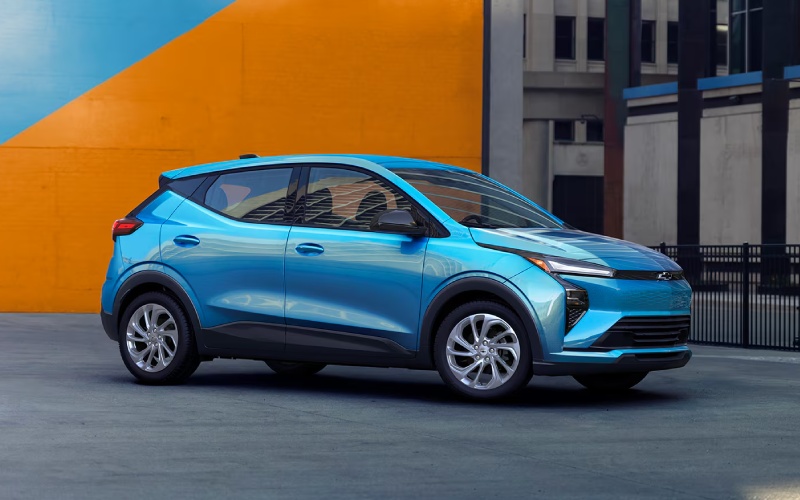
From quick top-ups during a Wonderland Station pickup to weekend drives up the coast, the 2027 Chevrolet Bolt is built to plug into the charging network Revere drivers actually use — including many Tesla Superchargers. If you would like a hands-on walkthrough, visit us at Pride Chevrolet on the Lynnway. We will show you how to find and use local NACS stations, demonstrate the Bolt’s charging screens, and help you compare LT and RS — including colors like Habanero and Marina Blue Metallic — so your EV fits your life on the North Shore from day one.

0 comment(s) so far on Can the 2027 Chevrolet Bolt use Tesla Superchargers around Revere, MA?